
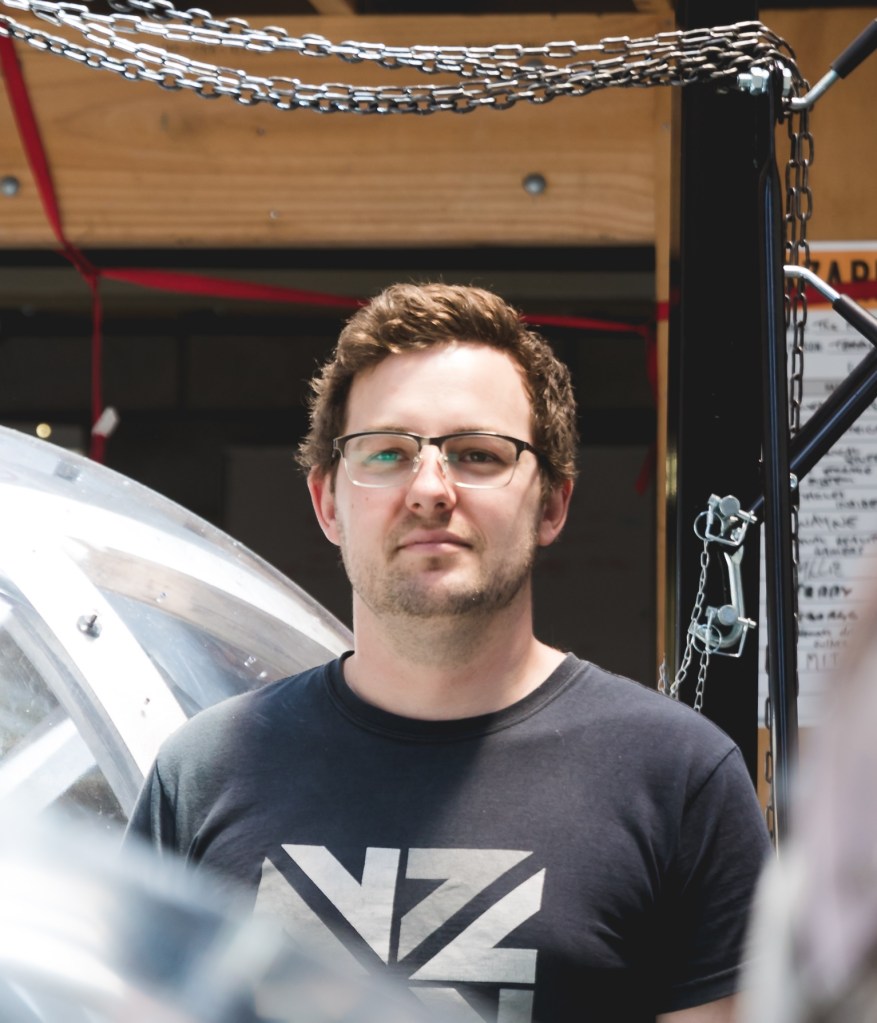
TERRY MILLER | CEO | EIGHT360
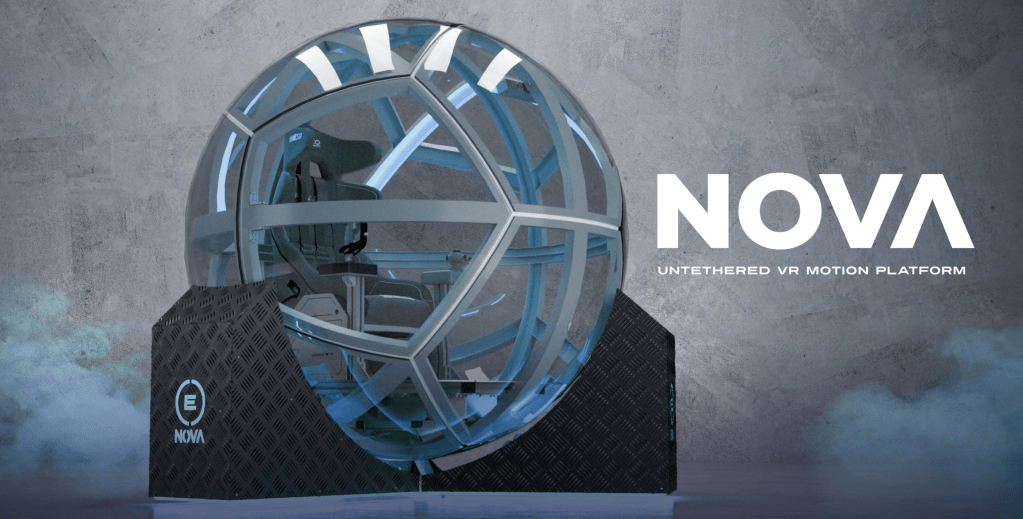
Virtual reality has long pushed the boundaries of simulation, but New Zealand’s Eight360 has taken immersion to an entirely new orbit. Its groundbreaking NOVA platform – a fully motion-controlled, transparent sphere – delivers true physical sensation and haptic feedback for users navigating complex virtual environments for New Zealand Defence Force. Now, that same technology is being deployed by Texas A&M University’s ASTRO Lab, where researchers are developing ultra high-fidelity, physically accurate simulations of the Moon and Mars. In collaboration with NASA Astronaut Dr. Greg Chamitoff and the SpaceTeams crew at SimDynamX, the lab uses Eight360’s untethered NOVA motion simulator with the virtual FLEX Rover to train future astronauts in lunar landings and rover operations here on Earth. Beyond Defence and Aerospace, CEO Terry Miller is looking to the future of VR entertainment and immersive gaming, envisioning a new generation of interactive experiences where users can feel and move as if they were truly inside another world.
Tell us about Eight360 and NOVA from heritage to where it is today.
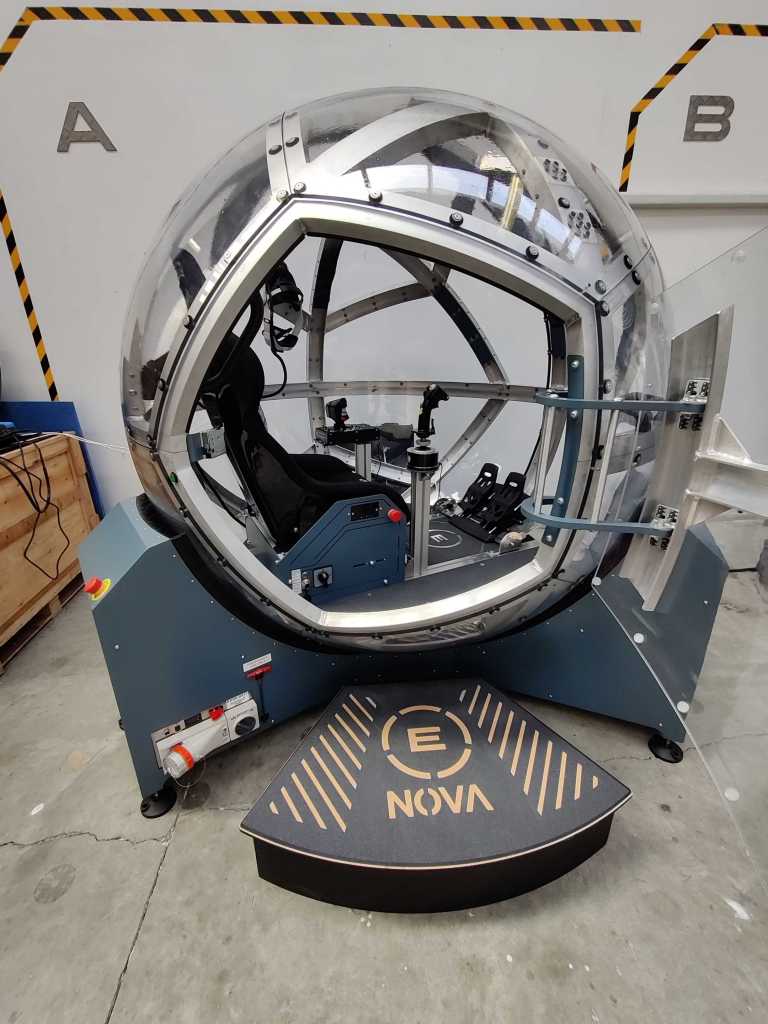
The company began with a concept for a new kind of simulator unlike anything that already existed, initially aimed at helicopter flight training. No one had ever built an untethered spherical motion platform before so it was also the challenge to see if it was actually possible.
We also saw how Virtual Reality could unlock new levels of realism and immersion in simulated experiences, and combining it with this concept of an untethered motion base would sidestep a lot of the barriers and complexity in building out a realistic simulator that actually felt like you were flying.
After years of prototyping and testing and iterating to reach the capabilities we envisioned, we brought the NOVA platform to market in 2020. Since then, we have been building and selling units internationally and working both in the Defence space as well as finding a foothold in Academic Research.
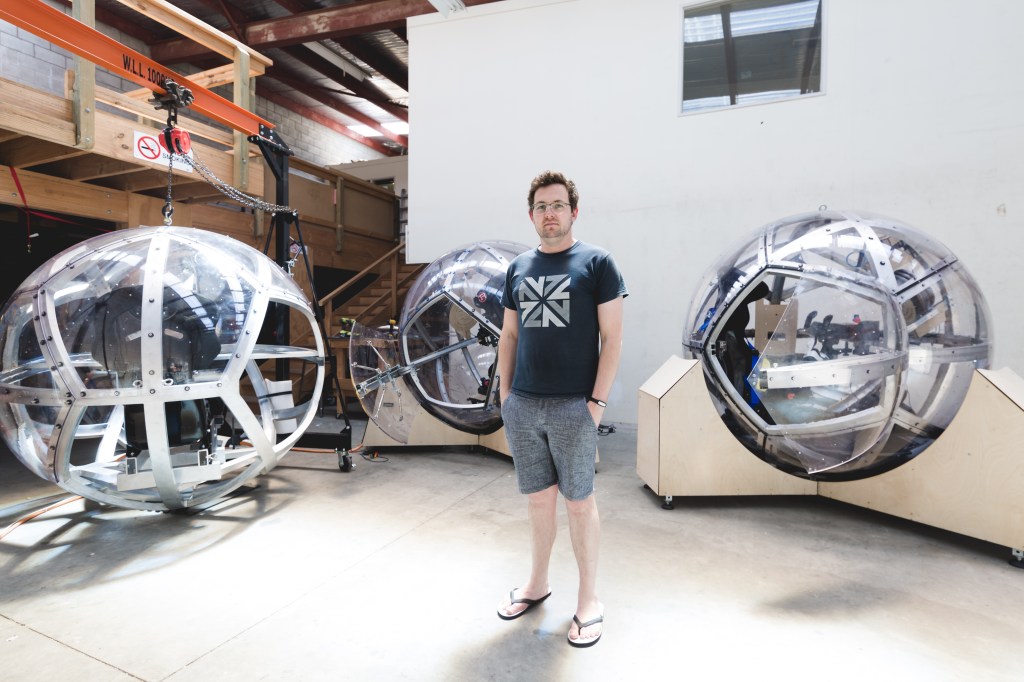
Exploring the market and talking to potential customers has really shown us the versatility and unique capabilities of our NOVA product. Essentially, we have created a universal ‘virtual vehicle’ platform which can be turned into any type of vehicle – land, air, sea or space. And those conversations continue to uncover new applications and use-cases that we have never thought of.
What were the major inflection-points as you transitioned from hobbyist to CEO of a hardware and VR company?
Each stage of our journey I have had to become something different. I began as the tech founder and it took us nearly a year to build the first iteration of the platform, working evenings and weekends on the side of real jobs and having to navigate a lot of unique problems along the way. We had to solve them ourselves with limited resources which meant being a jack-of-all-trades and learning all the different engineering disciplines to pull it together.
I took over as CEO not long after that, and we were able to raise some funding from Angel Investors and that allowed us to start assembling a team of engineering specialists and rebuilding the NOVA from the ground-up. It was a huge jump going from just focussing on engineering a product to handing off all of the engineering responsibilities and learning how to build and lead a team and run a company around it.
Once we had a product ready for market it was another big shift to become the salesman. I have had to learn marketing and business development, and how to talk to potential customers and get a sale over the line.
Throughout this journey I’ve also had kids and had to learn to balance my life both at work and at home, and from here I know that as the company grows and changes I’m going to have to grow and change with it to keep up.
You were recognised as Young Engineer of the Year in 2019. How did that recognition impact you personally and the company’s trajectory?
Winning the Young Engineer award was huge both for me and for the company. We gained high-profile recognition for our innovation and what we had already achieved, and the publicity boost meant suddenly people knew who we were and what we were doing – which drove a lot of interest and enquiries and helped us gather more support in the early days. As a scrappy garage startup it also gave the company, and myself as the Founder, a lot more credibility to be taken seriously when we began approaching larger organisations like the NZ Defence Force (NZDF).
Can you share an example of a major engineering hurdle you overcame and how that shaped you and your team’s approach to product development?
The NOVA concept has required us to solve two really difficult problems in order to make it work.
The first is tracking the moving sphere, because it is spinning and not attached in any way to the drive base, but the unit has to know exactly where it is at all times in order to control the movement accurately. The second is getting a VR headset to work inside the spinning cockpit and track it accurately to deliver a high-fidelity VR experience.
Both of these problems we have solved over and over, improving the performance with each iteration to get even closer to perfect. I think that is a really important idea that you have to be mindful of when you’re developing something complex and difficult like this – perfect is the enemy of good, and you have to just get something that works well enough and worry about polishing it later or you’ll never get it out of the lab.
Which motion tracking system are you using, have you developed your own IP to tackle this?
High quality tracking and low latency is hugely important to give a comfortable and immersive VR experience.
To do the motion cancellation we are using an OptiTrack stereo camera setup, fusing the positional data from the camera with other sensors in our own custom tracking driver so that the headset knows where it is even if you’re spinning upside down.
A few of your major use-cases are in Defence, Aerospace, academia, exhibitions and games. Could you walk us through which of these sectors you believe hold the greatest near-term growth potential, and why?
We believe Defence is the biggest opportunity to sell and deploy NOVA at scale. They have concrete requirements to develop and maintain skills and capabilities, need to deliver training to both new recruits as well as existing personnel, and have the budget to meet those needs. NOVA’s versatility and portability offer incredible capacity to economize on practice manoeuvres and adapt quickly in the field.
Once adopted, technology is spread across the forces with potential scope for tens or hundreds of units in different areas to achieve the necessary throughput.
What percentage of your business or pipeline would you attribute to entertainment or theme park and exhibitions versus strict training or industrial applications? Do you see crossover growth between those sectors?
One third of our sales last year were for entertainment, and there is definitely scope for crossover between the two – the same content and experiences that are developed for serious training applications can also be repurposed for entertainment and exhibition use. In fact some of our customers have been using their NOVA units to promote and demonstrate their work at trade shows and events outside of normal use.
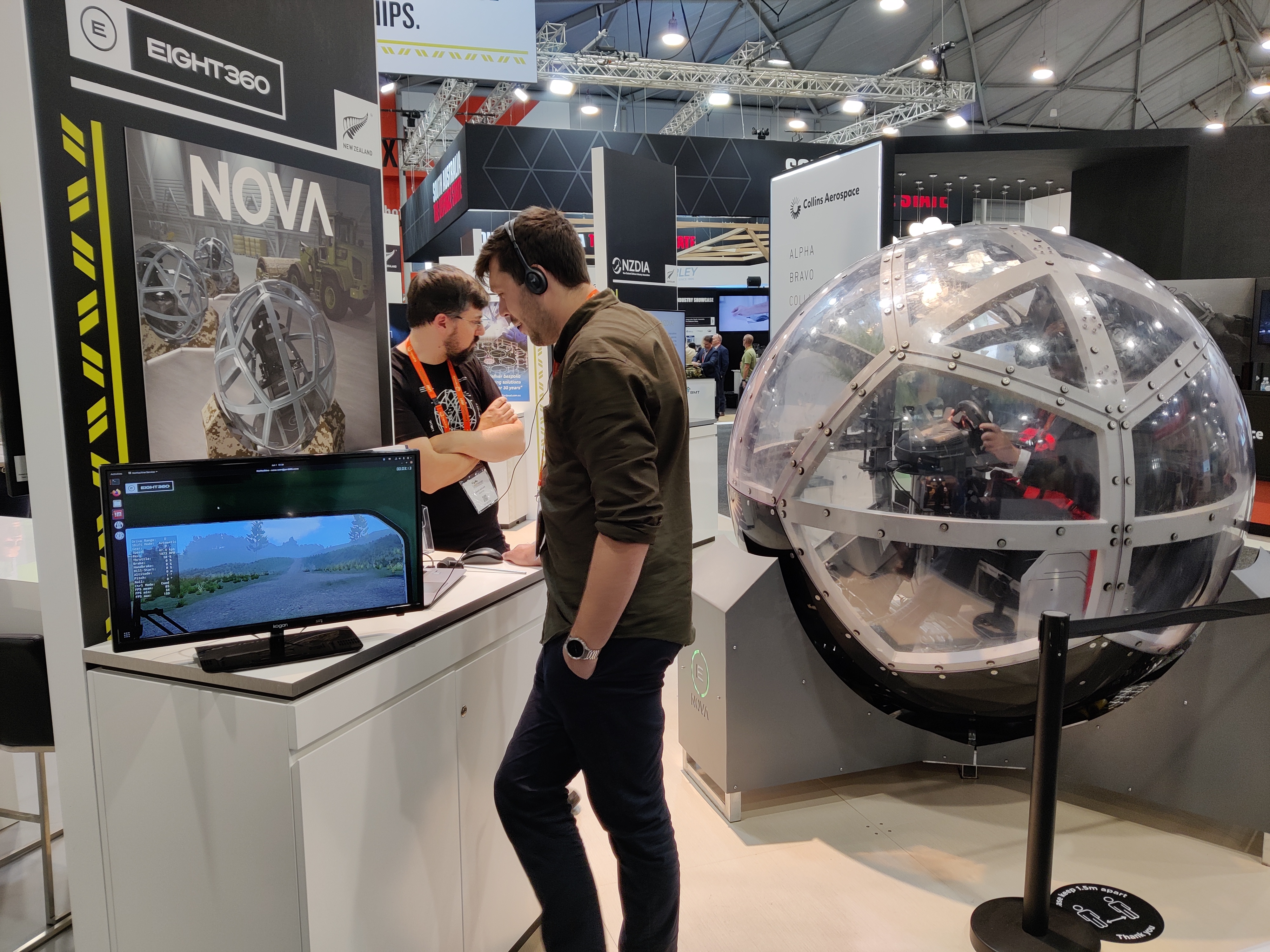
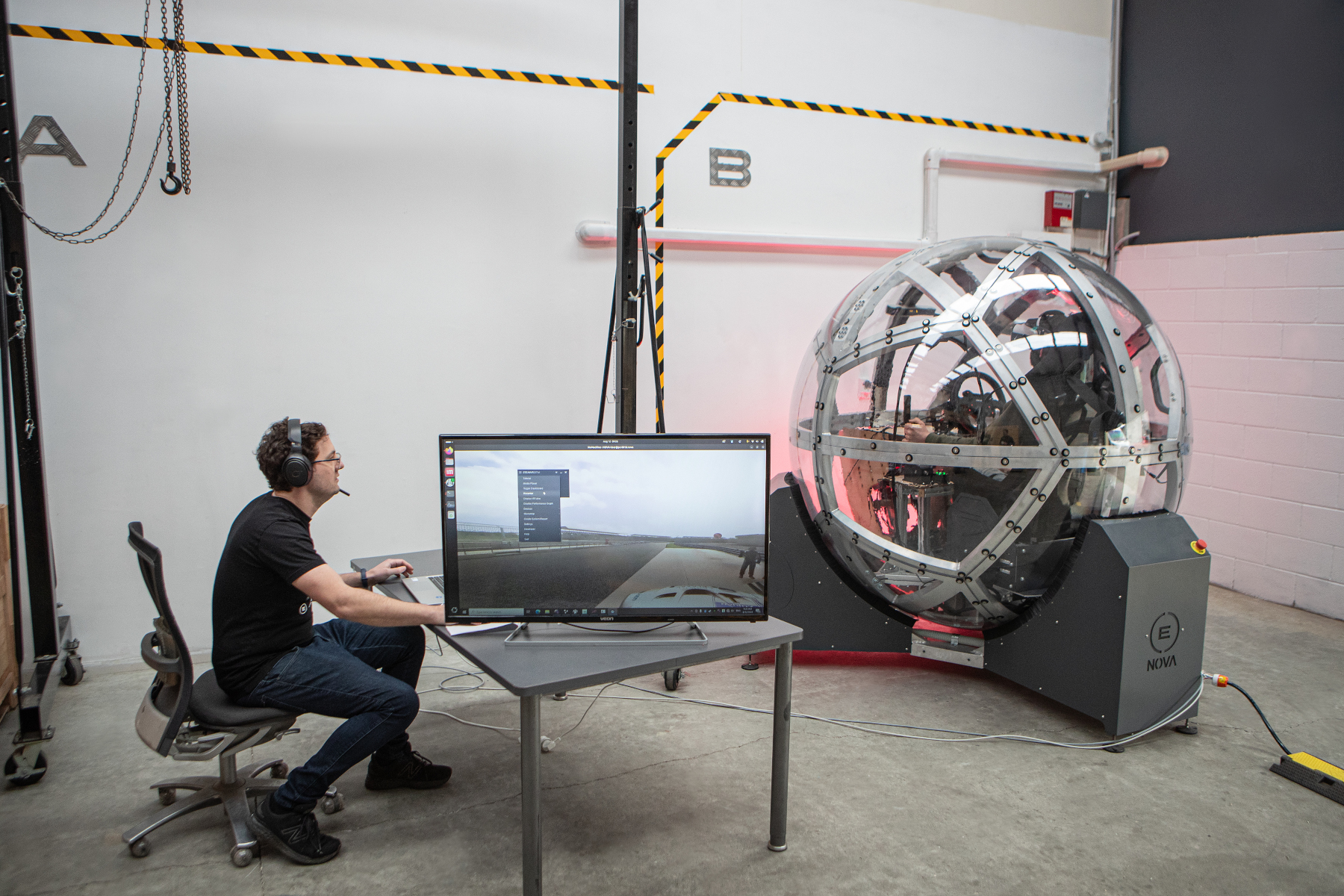
We have also been approached several times about potential Esport collaborations and it would absolutely make a spectacle, so maybe one day you’ll be able to tune in and see a row of our units lined up on a stage for the NOVA Games!
In this racing video we are running Assetto Corsa but in the past we have also tried iRacing, Dirt Rally and Project Cars downloaded from Steam.
The NOVA system can support a wide range of off-the-shelf games and sim content, which makes it very easy to set up for different experiences and allows us to leverage all of the additional add-ons and DLC available , e.g. in the flight sims we can find almost any aircraft in minutes and pull in custom scenery to match our home airport (or anywhere else in the world).
Can you talk about the key technologies which underpin the platform and is the system tech agnostic?
The NOVA’s physical design is actually pretty simple, but getting it to work properly is a very complicated exercise.
Being untethered we rely on internal battery power systems and wireless networking to control and monitor during operation. The most complex aspect of the product, and the ones that have taken the most R&D effort to perfect, are the motion tracking systems which are vital both for the moving cockpit itself and the VR headset inside.
We have built our own custom content in Unity in the past, but we know some customers are using Unreal Engine for their own projects.
Inside NOVA we’re running a standard windows PC and our custom VR integration driver behaves like a normal headset, so you can build content in any engine and have it supported. This is really convenient for users because it means any content built for NOVA can also be run on a normal desktop VR setup for development and testing.
Which HMD’s is your system compatible with?
We have been using the HP Reverb G2 for the standard build, and then offering the Varjo XR4 as a high-end option with eye tracking and passthrough capability.
The availability of headsets on the market is always changing and we are currently integrating the Pimax Crystal Light and Crystal Super as options for future units, but we can support just about any PCVR headset in the platform, so if a customer has a specific preference we can put it in.
Thinking further ahead, how do you envision Eight360’s motion-simulator platforms integrating with emerging and industry standard technologies like autonomous vehicle training, remote operation (robotics), digital twins or metaverse-based simulation?
I think there are a lot of different possible applications for our technology in these emerging fields.
Remote operation is taking over in a lot of industries. In dangerous fields such as forestry and mining they are looking to remove the operator from the vehicle for their safety, but still need a human to be in control in order to navigate uneven terrain or unpredictable environments. Having a fixed operator station will not necessarily give them the required level of vehicle feedback and situational awareness to avoid accidents e.g. felling trees on steep slopes without overturning the machinery (which is still expensive even if they are not inside).
Metaverse and digital twin technologies also offer a huge opportunity for NOVA simulators to connect into these ecosystems – allowing multiplayer networked experiences which bring users from around the world into the same environments and integrating with digital twins of real cities or vehicles to link the user back into the real world. We are excited to see where the future leads us.
Do you see remote collaboration platforms, for example, NVIDIA Omniverse as a complimentary platform for Enterprise usability?
Definitely, the Omniverse ecosystem is a hugely powerful tool for creating immersive and realistic virtual environments and scenarios, and enable collaboration across different groups and locations.
Our US partner Brightline Interactive is a leader in the immersive training and spatial computing domain, and their unique SpatialCore synthetic training platform was developed for the U.S Department of Defence on top of Omniverse. This foundation enables them to offer AI-enhanced development workflows and automation for simple, quick content development, and integrate with high fidelity digital twin models and geospatial data connectors to create complex and highly accurate environments easily. The open standards underpinning Omniverse allow the NOVA to connect seamlessly into their wider virtual training and simulation ecosystem, and be part of networked multi-user and multi-platform immersive training exercises.
Can you talk about some of the most innovative projects you’re working on or have worked on?
One of the most exciting projects we’ve been part of is the exploration of human spaceflight training systems using the NOVA platform.
Our customer Texas A&M ASTRO Lab is developing super high fidelity, physically accurate representations of the Moon and Mars environments, and spacecraft like the lunar landing module and moon rover, so that future astronauts can train to operate this equipment in these environments here on earth while preparing for real spaceflights.
In Defence training you’ve partnered with national forces such as NZDF. What trends in simulation training (cost-pressure, safety, logistics) are driving demand for a platform like NOVA?
Existing simulator platforms on the market are often single-purpose builds which require major rework to repurpose for different vehicles or applications. Many are also huge and very expensive, requiring dedicated facilities which add another barrier to delivering training efficiently as everyone has to travel to their location.
There is a major push worldwide to bring in more XR / immersive simulation training technology into service because conducting real-world training is complicated, expensive and time-consuming, with additional concerns around safety and wear / damage to vehicles.
Combined with more modern vehicle platforms that are integrating a huge amount of technology and expense in each unit, it is no longer practical to risk these for training purposes due to the cost and time involved in replacing them.
Because NOVA is rapidly repurposable, as well as compact and transportable, it unlocks a whole range of efficiency gains for training, as a unit can go where the training is needed and be used for a range of different applications even in the same day.
Finally, what strategic partnerships (software, content, vehicle OEMs, Defence integrators) are most important for your business and why?
Eight360 has developed an incredibly capable and versatile simulation platform, but in order to deliver the value and results to the end customer often there is another stage of development to present a tailored solution to their specific needs. The content and buildout customisation is what unlocks the value for end-users and that’s where a Solutions Integrator comes in.
Eight360 partners with Solutions Integrators in a really symbiotic relationship – we have this technology platform that unlocks new applications and opportunities in the market, but we also leverage our partners’ software and content development expertise, as well as their existing place in the market and personnel on the ground where customers are, to deliver the final product.
Additional resources:
RMIT University – First-in-Victoria spinning simulator to turn heads
University of Sydney – Simulator lets students and researchers pilot aircraft, spaceship
HITLab – Immersive motion ball a potential VR training tool
Return to TrailblaXR Magazine
Become a future TrailblaXR.
Let Instinctively Real Media promote your brand, contact Enquiries@InstinctivelyReal.com for a chat.


Discover more from Instinctively Real Media | Global Creative Agency
Subscribe to get the latest posts sent to your email.
